Tinsae comes from the Ge'ez verb tenesse'a, meaning to rise. The Old Testament Passover marked Israel's passage from slavery to freedom and from sorrow to joy. The New Testament feast of the Resurrection is our spiritual Passover: from sin to righteousness, from shame to glory, and from the old life to the new. Fasika comes from the Hebrew Pesach, meaning to pass over. The resurrection of Jesus Christ is the foundation of the Christian faith and the assurance of eternal life.
The Great Lent and Holy Week
After his baptism Christ fasted forty days. The Great Lent (Hudade) lasts fifty-five days before the Resurrection and includes eight Saturdays and seven Sundays; because the faithful do not fast from grain and water on those days, the fasting itself is forty days. The weeks carry their own names, and the final week is Holy Week.
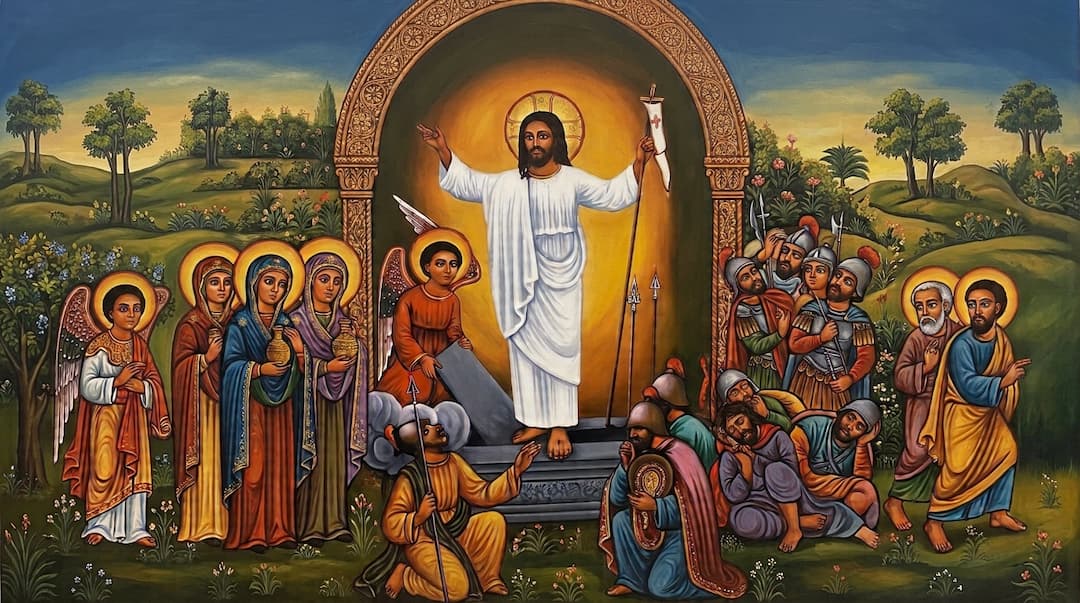
Christ accepted the suffering of the Cross and died on Good Friday. The sinless God died in the flesh so that Adam, whom he had created, could be freed from the sentence of death. Joseph of Arimathea and Nicodemus took down his body, wrapped it in fine linen, and laid it in a new tomb. The tomb was sealed and guarded, but on the third day, at the dawn of Sunday, he destroyed sin, death and the grave and rose again with great power and authority.
The witness of the myrrh-bearing women and the apostles
Mary Magdalene, Mary the mother of James, and Salome were the first witnesses. The angel told them, "I know that you are looking for Jesus who was crucified. He is not here; he has risen." The women ran with joy to tell the apostles, and the Lord appeared to them on the way. The apostles saw the Lord face to face and worshipped him.
Thomas Sunday
The eighth day of the week of the Resurrection is called the Second Resurrection, because it remembers the witness of the apostle Thomas. The Lord appeared to the disciples behind closed doors and said to Thomas, "Put your finger here and see my hands. Believe, and do not doubt." Thomas answered, "My Lord and my God."
The celebration of the Resurrection
By the rule of Bahire Hasab, the Resurrection always falls on a Sunday. In the Ethiopian Orthodox Tewahedo Church it is celebrated with the midnight liturgy on Saturday night. Believers come to church dressed in white, and the proclamation is sung: "Christ has risen from the dead, with great power and authority; he bound Satan and set Adam free; from now on there is peace." The joy of the Resurrection continues for fifty days until the feast of Pentecost.